How to encourage girls to participate in sport
Our hope is that this advice — whether you’re a parent, a coach, or an athlete yourself — finds ways to keep girls enjoying and engaged with sport.

Sport is one of the best classrooms we have. At any age, you learn valuable mental skills, like confidence, discipline, teamwork, and more.
But studies show that by the age of 16, half of Canadian girls are missing out on sport. That means that, in the current state of teen girls and sport, 50% of young women don’t have the same opportunities to learn to be strong communicators and performers.
Fortunately, there are dozens of ways to encourage girls to participate in sport, from on-screen representation to stronger social interactions. Our hope is that this advice — whether you’re a parent, a coach, or an athlete yourself — finds ways to keep girls enjoying and engaged.
(Also, to be clear, these tips work for children of any gender identity and people of any age. The purpose of this article is to focus on the disengagement crisis among girls and how to encourage them to participate in sport, but it’s good advice for everyone, if you were to ask us.)
- Find strong role models
Surrounding girls and young women with positive influences, diverse body types, and successful women shows them what they’re capable of from a young age. It teaches them that they can be successful regardless of what they look like — whether that’s in sport or in life.
- On the sidelines: Women are less likely to be in leadership roles in sport. Of women aged 19-26, 30% might be involved in coaching positions, compared to 51% of men. That’s not enough! Girls and young women deserve to see themselves represented in their leadership. If you can choose teams with female coaches or opportunities for women to get involved, you’ll have better representation for teens.
- On the T.V.: Canadian research shows that men’s sport dominates media coverage at 90%. Fortunately, the demand is growing: viewership of women’s sports is on the rise. According to CBC, of the three of the 10 most-watched moments of the 2026 Winter Olympics in Milan were women’s hockey games. Viewership is increasing, and it requires our participation. Centre female sports wherever possible.
- Online: Professional female athletes are seen as impactful role models for younger women. And we’re seeing greater and greater visibility: female athletes have 14% larger followings than male athletes. Encourage teens to find role models who are strong, successful athletes who inspire them to chase similar goals.
Consider Olympian Eileen Gu, who went viral for her response to a journalist. The male journalist asked her if she considered her gaining two silver medals was like actually losing two gold. Gu laughed and then said, “I’m the most decorated female freeskier in history.”
That confidence, that ability to stand up for herself and point to her accomplishments, is exactly what young girls should be seeing in the media, in training, and in life.
- Encourage positive body image
Thousands of girls opt out from sport because of body confidence or body image issues. Rally Sport found that 1 in 2 girls find that sport positively impacts their body image, since they’re focused on what their body can do and not what it looks like. But that still leaves 50% of girls who don’t feel the same way.
Luckily, there’s potential to expand our understanding of what a “sporty” body looks like or how athletes feel about them with these methods:
- Set inclusive dress codes: Athletes are more likely to be uncomfortable if they feel they’re being watched. Having flexible dress codes for practice or options for uniforms can help teens feel more comfortable in what they’re wearing, taking off some of the pressure. Something as simple as having a black short option so that girls aren’t wearing white when menstruating can relieve a lot of stress.
- Limit conversations about weight: Unless you’re in a weight-based sport, there’s no reason for coaches or teammates to comment on other athletes’ bodies. Coaches can create no-tolerance policies for comments like this, and parents can work to call out and shut down conversations about weight whenever they hear them. Emphasizing what a body can do over what it looks like has the potential to transform an athlete’s mindset.
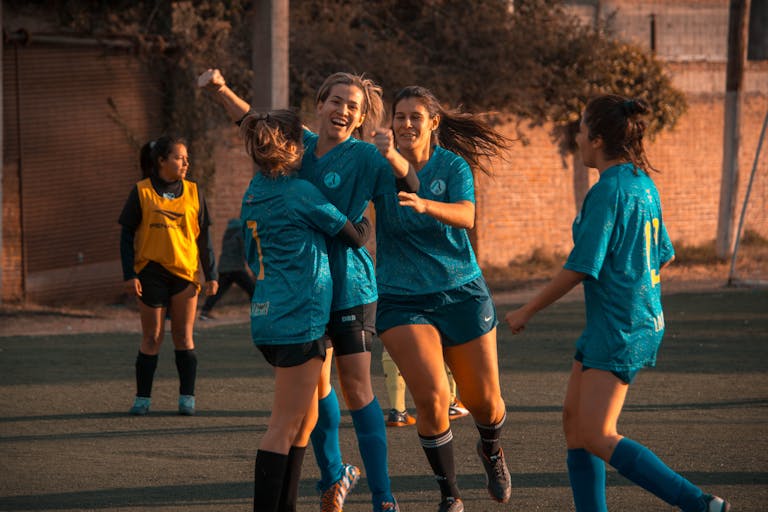
- Create a culture of celebration: Positivity goes a long way when creating a safe environment. While limiting conversations about topics like weight is one step, making an effort to constantly give positive feedback and celebrate wins, no matter how small, is a great way to keep athletes engaged and make sport fun.
- Spotlight positive role models: We mentioned it above, and I’ll mention it again: What teens are seeing is influencing them, day in and day out. While you can’t control everything that kids see online, you can take opportunities to center strong women and professional athletes who look like them.
To offer another potential role model, let’s consider Ilona Maher. Maher is an Olympian, winning bronze with the U.S.A. Rugby team in 2024. And she’s been very vocal about challenging the body type that people expect female athletes to have, whether that’s in size or appearance. As she points out to anyone commenting on her weight, she’s an Olympian, and they’re not. Her body is the body of a professional athlete, no matter what someone has to say about it.
Since then, Maher has used her influence for good: she was on the cover of Sports Illustrated’s Swimsuit Edition, appeared on Dancing with the Stars, and has over 5 million Instagram followers.
Platforms like TikTok and Instagram are used by over half of teen girls, and there’s been a wealth of research done on how this harms body image. Making sure that these girls see strong, successful women is crucial to helping them keep positive associations with their bodies.
- Focus on confidence-building
By age 14, girls drop out of sport at twice the rate of boys. One of the top reasons is not a lack of ability. It’s a lack of confidence.
When researchers ask girls why they leave, they rarely say, “I wasn’t talented.” They say, “I didn’t feel good enough.”
Self-confidence is the perception that you can manage yourself and influence what happens around you. It isn’t something you either have or do not have. It is built through repeated experiences of safety, support, and small wins. For teen girls in sport, confidence does not develop by chance. It is shaped by the environment adults create around them.
If we want girls to stay, we must build confidence on purpose. Here’s how:
- Past accomplishments: Remind girls of the challenges they have overcome and the skills they have improved. Reflection builds evidence of capability.
- Strengths: Help athletes notice their skills and character traits, from awareness to leadership and grit. Knowing what they do well reinforces confidence.
- Preparation: Provide clear expectations, structured practices, and skill repetition. Preparation reduces uncertainty, and reduced uncertainty strengthens confidence.
- Process: Shift the focus from outcomes to effort, learning, and growth. When progress matters more than perfection, pressure drops and belief rises.
- Praise: Recognize bravery, improvement, and persistence over results. Treat mistakes as information, not failure, so trust can grow.
When we focus on confidence building in teen girls in sport, we aren’t trying to make them louder or more outwardly bold. We’re helping them build a steady belief that they can manage themselves and influence their environment. That belief is often the difference between leaving sport and leaning into it.
- Encourage autonomy
When girls are allowed to dictate what they like and how they want to spend their time, they’re more likely to enjoy it. As a parent or coach, you can take it upon yourself to check in with female athletes to see what they actually want.
For some, it might be to focus on a singular sport, while others might be tired of being single-sport athletes. A teen who recently started playing more competitively might enjoy it less, and someone in a less competitive league might be bored.
Let girls decide what they want to do, and let them do it.
- Build an active community
If you ask the average athlete what they love about their sport, a good number would tell you it’s their teammates or the friends they’ve made through sport.
It leads to better friendships, too. A small study found that teens who participated in an outdoor challenge were more bonded and had greater well-being. Research from Norway found that one of the main reasons youth participate in sports is for social outcomes, like making friends. Athletes with friends in sport are more likely to want to participate in sport, rather than feel that they have to.
Having people who share some of your frustrations — whether that’s struggling to perfect a move in training, balancing the demands of school and sport, or losing a crucial game — is key to feeling heard and understood.
Plus, you’ll be a positive influence on one another, attending practice and potentially choosing athletic activities to do together when you’re not training.
- Stay active at school
Sport is expensive. Many children, including new Canadians and those from lower-income families, participate less in sport.
School sport and physical activities are more accessible, especially financially, than organized sports. But the logistics are also difficult. The average sport might have schedule constraints, like early morning practices or weekend tournaments, or transportation barriers. For example, if students need to take a school bus to and from school, parents might not be able to arrange transportation around work schedules, meaning kids might not be able to stay after school to participate in sports.
The simplest way for kids to stay active in school is in gym class. There are also organizations that offer funding or opportunities for children who need support, whether through community organizations running activities or grants to cover registration and equipment fees. Finding ways to support children participating in school is key to keeping them active.
- Make it a family affair
One way to keep teens active is to exercise together.
A 2022 Survey by the Canadian Fitness and Lifestyle Research Institute found that 28% of parents often play games or sport with their children, and 44% do sometimes. These numbers are higher in parents of 5–11-year-olds than of 12–17-year-olds, but they offer an optimistic starting point.
And friends count as community, too. A small study found that teens who participated in an outdoor challenge were more bonded and had greater well-being.
While going for a run or kicking a ball around with your best friend or parent might seem embarrassing to some teens (in the “too cool to be seen with my parents ” phase), there are several benefits to working out as a family:
- They aren’t alone. Fears of being watched or looking out of place are lessened when teens aren’t working out alone.
- It sets an example. Not every Canadian hits the recommended amount of physical activity. By prioritizing exercise and showing kids how to live a healthy lifestyle, children see a model for a physically active life that they can sustain into adulthood.
- It strengthens family relationships. No, really — and these families are more likely to meet physical activity guidelines and screen time recommendations, according to research by the Canadian government.
- Keep it fun
Something that kills sports for dozens of athletes is the pressure. Not only to succeed, but to navigate relationships with teammates and the stress of a busy schedule. After a certain point, stretching for performance or putting in long hours makes sport feel like a chore, not a joy. Putting an emphasis on how you can make sport fun — even if that’s a post-game ice cream cone, for now — encourages girls to stick with it.
Focus on keeping sport fun. Chances are, teens want to participate in a sport because they love it. Don’t let the pressure to perform take that away.
Recent Olympic champion Alysa Liu, who won two gold medals at the 2026 Winter Olympics, originally quit the sport because there was so much pressure. She wasn’t having fun anymore. When she came back on her own terms, it was focused on having fun. In an interview, she said she was happiest when out on the ice.
That’s what sport should be about — feeling joy, having fun. Finding ways to keep sport fun and keep athletes happy could be all the difference in successful performance.
Want to learn how to have fun in sport again?
What Build Better Humans is doing about it
At Build Better Humans, we’re no strangers to the barriers that exist in sport. Both within teams and across organizations, there are major gaps in the support offered to young athletes.
That’s what we’re aiming to fix. We want to help athletes build mental tools and skills for life through sport, making them not only better performers but better people — better students, communicators, friends, and more.
Whether you’re a coach trying to better lead your team or a parent who needs help supporting a child, we can help. And if you’re an organization that needs advice on how to structure a program or want help building out equity initiatives, we can help with that, too.
Explore our services and see how we can work together to transform how youth experience sport.