
Mental health
and sport

Understanding the mental landscape so you can support better

Mental health affects all of us. Not just athletes. Not just people who are struggling. Everyone.

For many parents, coaches, and organizations, mental health still feels confusing or intimidating. People worry about saying the wrong thing, missing something important, or overreacting. Others aren’t sure what kinds of support exist, when to seek them, or who to turn to. This page exists to change that.

Our goal is not to diagnose or label. Our goal is to help you begin to understand the mental health landscape, so you can make informed, confident decisions about the best way to support yourself.

What is mental health?

Mental health is a state of well-being. It reflects how someone copes with stress, manages emotions, builds relationships, learns, works, and feels about themselves.

Mental health is not something you either have or do not have. It exists on a spectrum and changes over time. Someone can feel mentally healthy in one season of life and struggle in another. That doesn’t mean they’re broken. It means they’re human.

The Tripartite Model of Mental Health

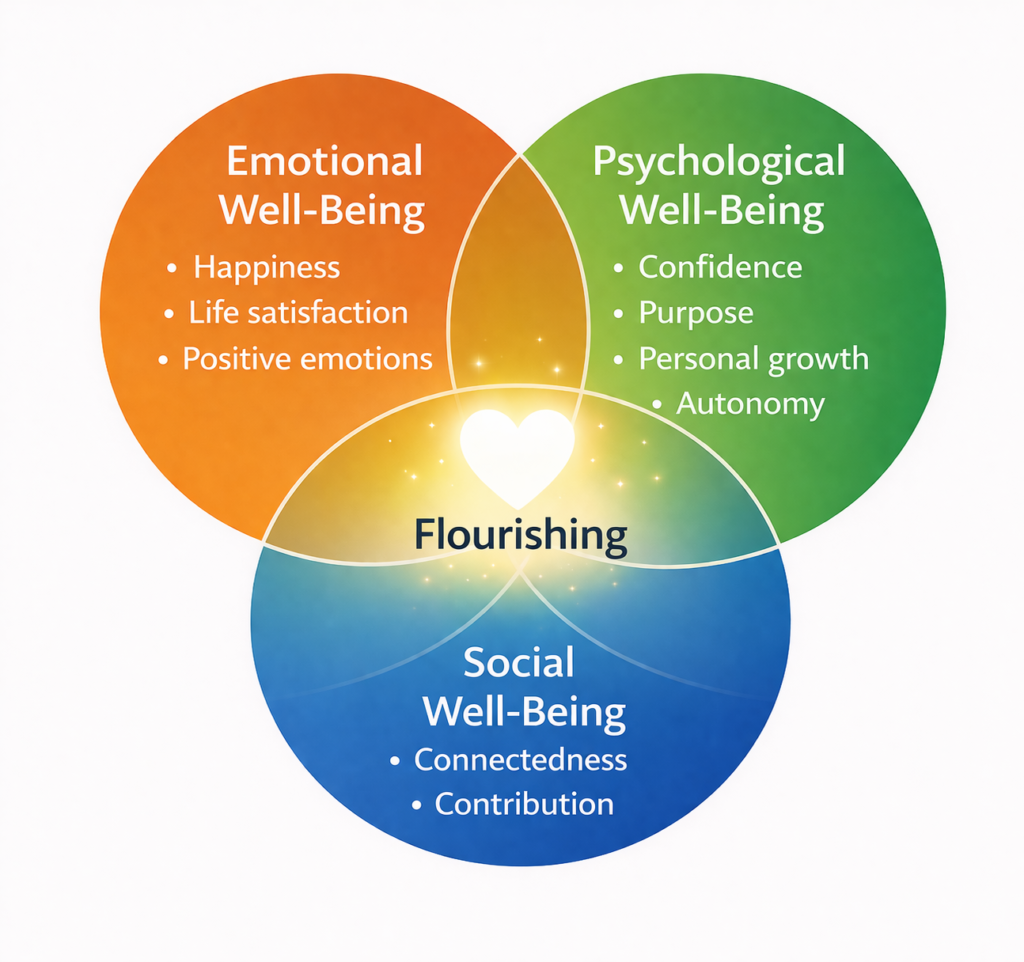
Developed by Corey Keyes, the Tripartite Model of Mental Health explains that well-being has three interconnected parts.

  • Emotional Well-Being: This is about how you feel. It means feeling happy, calm, and satisfied most of the time. It also means being able to handle tough emotions like sadness or stress in healthy ways.
  • Psychological Well-Being: This is about how you think and grow. It includes having confidence in yourself, setting goals, feeling in control of your life, and continuing to learn and improve. It’s about feeling a sense of purpose and becoming the best version of yourself.
  • Social Well-Being: This is about your relationships and community. It means getting along with others, feeling like you belong, and believing you matter to your family, friends, and society. It’s about being kind, working well with others, and contributing to your school or community.

Together, these three parts help you feel mentally strong and ready to face life’s challenges. Supporting mental health means creating conditions where people can cope, grow, and ask for help when they need it.
Mental performance and mental capacity

Mental performance focuses on building mental tools and skills that increase mental capacity. Mental performance consulting is widely used in sport and performance environments.

More mental capacity helps people:

  • Manage stress more effectively
  • Recognize challenges earlier
  • Apply coping skills more consistently
  • Communicate needs more clearly
  • Stay engaged in growth, even when things are hard

Mental capacity is supported by Certified Mental Performance Consultants (CMPC’s)!

What about mental illness?

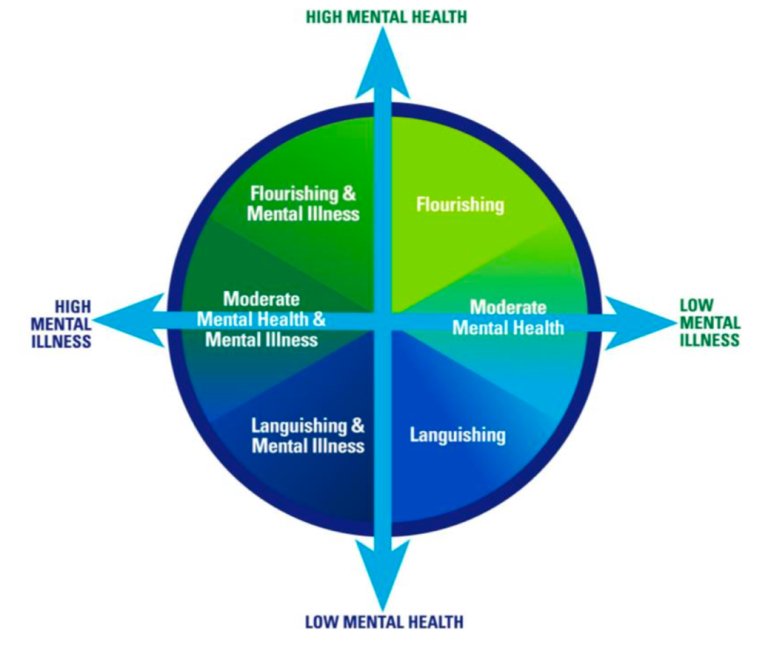
Mental illness refers to diagnosable conditions that affect mood, thinking, behaviour, or daily functioning. These conditions exist on a spectrum and may require clinical or medical support. Mental illness is not a failure of mindset, effort, or toughness. It is a health issue that deserves appropriate care. For more resources, please see our directory. Both mental health and mental illnesses exist on their own axis, as illustrated here with Keyes’ Model (2002) of mental health.

Clinical support related to illness

Clinical support may include counselling, psychotherapy, psychiatry, or other medical services. These forms of care focus on assessment, diagnosis, treatment, and symptom management. Seeking clinical support is not a weakness. It is a responsible step toward managing illness and working towards improving well-being. For more resources, please see our directory.
The mental trial

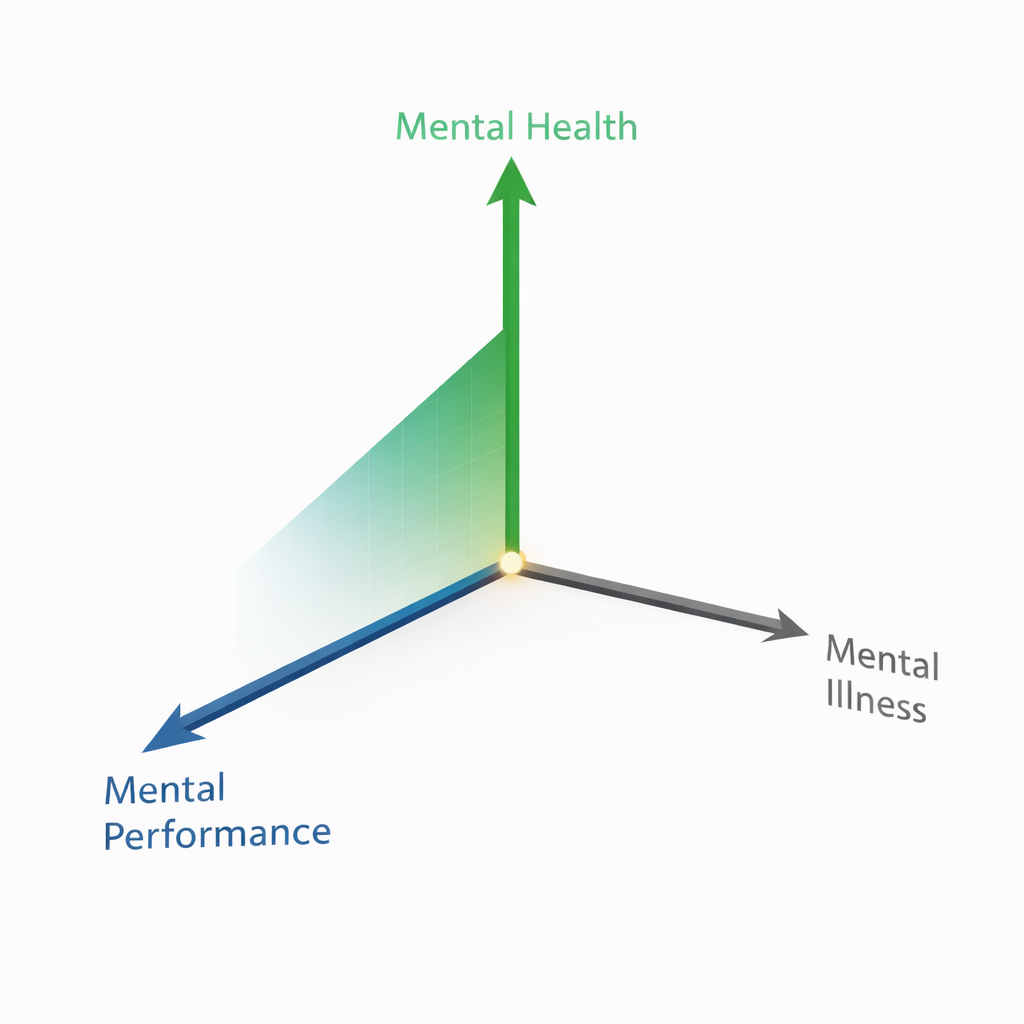
Mental health, mental illness, and mental performance are connected, but they are not the same. Together, they form what we call the Mental Triad.

Each exists on its own axis, but they influence one another.

  • Mental health reflects overall well-being.
  • Mental illness refers to diagnosable conditions that may require clinical care.
  • Mental performance focuses on the skills and tools that increase mental capacity.

Understanding the difference helps people seek the right support at the right time.

Mental performance support doesn’t diagnose or treat mental illness. It does not replace clinical care. What it does do is increase mental capacity. In this way, mental performance skills can support the management of mental health and mental illness alongside appropriate care.

Someone can have strong mental performance skills and still struggle with mental health. Someone can receive excellent clinical care and still need help applying skills in daily life. Someone can feel mentally healthy and still benefit from learning how to handle pressure or communicate better.

This is why choosing the right kind of support matters. Good care means:

  • Understanding scope and boundaries
  • Collaborating across professions
  • Referring when needed
  • Supporting the whole person, not just symptoms

There’s no single solution. There’s only the right support at the right time.
Why this matters in sport

Sport is a powerful learning environment. It teaches skills like effort, discipline, teamwork, and courage. It also introduces pressure, comparison, identity challenges, and evaluation.

For young people, especially, sport can shape how they see themselves and how they cope with stress. Mental health shows up in sport, whether we talk about it or not.

When mental performance skills are taught intentionally, athletes are better equipped to:

  • Handle pressure without shutting down
  • Respond to mistakes without spiralling
  • Communicate needs and boundaries
  • Stay connected to joy and purpose

Mental health in sport is increasingly recognized as a shared responsibility across systems. Mental health in sport is not an individual issue to fix. It is a shared responsibility across parents, coaches, organizations, schools, and practitioners.

Our role and responsibility

At Build Better Humans, we believe in advocacy, accessibility, and applying these principles in our work and in advancing the field.

Our role is to help people better understand the mental health landscape so they can make informed decisions about support. We want to:

  • Teach mental tools and skills responsibly
  • Stay within our scope of practice
  • Recognize when other support is needed
  • Refer and collaborate with clinical professionals
  • Advocate for better systems and access

Advocacy means helping people understand the landscape, not selling solutions that don’t fit. Mental performance support is not about pushing through at all costs. It’s about building capacity, awareness, and sustainable growth.

Walkway with wooden railings leading to empty sandy beach along green plants on background of blue sky

Mental Health
Frequently Asked Questions (FAQ)

The questions below address common concerns we hear from parents, coaches, athletes, and organizations every day. They are here to help you understand how mental health, mental illness, and mental performance fit together in real life.

If you’re ever unsure, that is okay. Support works best when it is shared. We are here to help, even if you never work with us directly.

Mental health is a state of well-being that allows people to cope with stress, learn, work, build relationships, and contribute to their community.

Mental illness refers to traits of a wide range of conditions that affect mood, thinking, behaviour, and daily functioning. These conditions exist on a spectrum and may require clinical or medical support.

Mental performance is the capacity to handle pressure, focus, regulate, make decisions, and perform consistently in demanding environments like sport, school, or leadership roles. These same tools and skills also support the management of mental health and mental illness by increasing self-awareness, emotional regulation, coping capacity, and resilience, even though they don’t replace clinical care.


Together, these form what we call the mental triad. They operate on separate but connected axes. Someone can have strong mental performance skills while struggling with mental health, or vice versa. That’s why choosing the right type of support matters. For a deeper explanation, see our blog on the mental triad.

Mental performance consulting focuses on building mental tools and skills for performance and growth. This includes skills like confidence and focus, as well as tools like self-talk. CMPCs do not diagnose or treat mental illness. What they do offer are skills that can help people better manage stress, emotions, and challenges alongside other forms of mental health support.

Therapy focuses on treating mental health challenges and mental illness. Therapists work with emotional distress, trauma, and mental health symptoms that impact daily functioning.

Both are valuable. They simply serve different purposes.

They’re connected, but not the same. There are two important distinctions:

Applied sport psychology is a broad domain that includes research and applied work related to the social, emotional, cognitive and physiological areas of performance. Mental performance consulting is one applied role within that field, focused on teaching and supporting mental tools and skills. Think of it as a gym for your mind.

When someone uses the title Sport Psychologist, they’re often a registered psychologist who provides clinical services and works in sport or performance contexts.

Yes. While they do not prevent or treat mental illness on their own, mental performance skills like emotional regulation, self-awareness, a growth mindset, communication, and coping strategies increase mental capacity.

Stronger mental capacity helps people manage stress more effectively, navigate challenges earlier, and seek the right support sooner when needed.

No. That’s a common myth. Mental performance looks different depending on age, context, and goals. These skills can be especially powerful when learned early. Think of it like compound interest in a savings account. The earlier you start, the more it pays off over time. The bigger the base, the higher the peak!

Common areas include preparing for a competition, improving focus, increasing confidence, responding to mistakes more helpfully, communicating better, leadership, transitions, and staying steadier under pressure. If the challenge is primarily about learning skills and navigating performance situations, this is likely a good fit.

Acute mental health crises, untreated trauma, severe anxiety or depression, self-harm, eating disorders, or anything requiring diagnosis or medical care. In those cases, clinical support is essential, and we’ll help direct you to appropriate resources. Our resources section is a good place to start.

Counselling is a regulated mental health service that often focuses on emotional processing, personal distress, and mental health challenges. Mental performance consulting does not provide care related to mental illness or daily psychological functioning. Instead, they focus on teaching, applying, and refining skills that support performance and growth in specific contexts.

Psychotherapy is a regulated mental health service used to assess and treat mental illness and psychological disorders. Mental performance consultants don’t diagnose, treat, or provide psychotherapy. We also don’t prescribe medication or provide medical care. Instead, we focus on learning, applying, and refining skills that support performance and growth in specific contexts.

Psychiatrists are medical doctors who diagnose mental health conditions and prescribe medication. Mental performance consultants do not provide medical treatment. Instead, they focus on teaching, applying, and refining skills that support performance and growth in specific contexts.

Yes. Support needs are often complex and sometimes overlap. It can happen that different professionals are working on the same challenge. It’s also common for individuals to work with multiple professionals at the same time, each supporting a different part of the person or a different approach. 

From our perspective, good care means staying within our scope while collaborating or referring when another scope is needed. Mental performance tools often support the management side of mental health by strengthening coping skills and capacity, while other practitioners address diagnosis or treatment.

Yes. Many people do. Therapy may address mental health concerns, while mental performance consulting supports the ongoing capacity management of stress, emotions, and performance demands through skill development. When done well, they complement each other.

Yes. Some practitioners hold multiple credentials, like being both a registered clinical counsellor and a CMPC. Even when someone is dually trained, they are clear about which role they are practicing in at any given time. Scope and ethics always come first.

Then we help them find it. If we believe someone would benefit more from counselling, psychotherapy, or medical care, we’ll say so and help with next steps, whether that’s within our network or elsewhere. In many cases, mental performance support can still play a complementary role by helping people apply coping and regulation skills in daily life once appropriate care is in place.

Yes. Our practitioners are trained to recognize concerns, understand boundaries, act as allies, and refer appropriately. Client safety and ethical practice always come first.

If mental health concerns emerge during our work together, we pause and reassess. That might mean adjusting goals, involving caregivers, or referring to a qualified mental health professional.

Mental performance consulting doesn’t replace clinical care, but it can support people once appropriate care is in place by helping them apply coping, regulation, and communication skills in daily life.

That’s part of the first call. We listen, ask questions, and help determine whether mental performance consulting is a good fit or whether another form of support would be more appropriate. There’s no pressure to move forward if it’s not the right match.

Mental performance consulting is still inconsistently covered by insurance, even though it’s widely used in sport and performance settings. This is slowly changing, though. We’re part of the broader effort to improve visibility and access. If you’d like to support that work, let us know.

LET’S TALK

If you believe sport should build more than results, you’re in the right place. Whether you’re a parent trying to support your child, a coach wanting to do better, or an organization looking to change culture, we’d love to connect.

Reach us by filling out this fancy form over here.